How Many Hours Of Event Photography Do You Actually Need?
After 17 years behind the lens at corporate conferences, fundraisers, store openings, and parties, here's what I've learned about coverage that clients almost always get wrong.
It's one of the most common questions I hear before any event: How many hours do I actually need? I've been photographing corporate events, conferences, store openings, fundraisers, and parties for 17 years, and the honest answer isn't a number, it's a question back to you: What do you want to feel when you look at these photos?
If you want to feel like the event simply happened, shorter coverage can work. If you want to feel like you're back in the room (the energy, the laughter, the unexpected moments ), a longer window makes all the difference.
The Misconception That Costs Clients the Most
Almost every client books coverage around The One Big Thing: the cake, the speaker, the ribbon cutting, or the toast. I get it. That's the centerpiece of the event. But here's what they don't realize until they get their gallery back: that centerpiece moment might be ten minutes of a three-hour event.
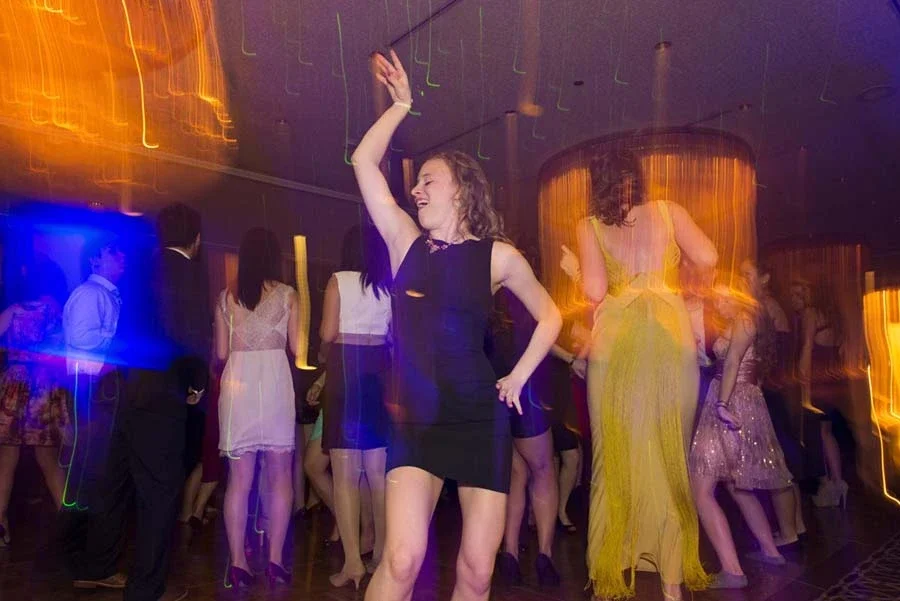
What doesn't get captured in a short window? Guest arrivals and the genuine reactions on people's faces. The quiet conversation between two colleagues that turned unexpectedly funny. The atmosphere as the room fills and the energy shifts. The way a space looks before the crowd takes it over.
When clients receive their gallery, their favorite images almost always come from the in-between moments: The arrivals, the laughter, the unexpected interactions, and the energy as the celebration unfolds.
I can't count how many times a client has messaged me after delivery saying some version of: "I wish I'd booked you for the whole event." Shorter bookings almost always result in fewer usable images and a gallery that feels like a highlight reel rather than a full story.
A Real Example: The Birthday Party That Taught Me Everything
CASE STUDY — 2-HOUR COVERAGE PACKAGE
I once photographed a birthday party with a 2-hour coverage window. I captured the cake cutting, a few beautifully styled decor shots, a group photo, and some genuine candid moments. The results were solid: Around 50 usable images delivered. But what was missing told the real story: The guests arriving, the hugs at the door, the host's face before the chaos of a full room set in. What we delivered felt like a curated highlight reel. What the client wanted was the full story.
That experience shaped how I talk to every client now. Fifty images of a key moment is fine documentation. But it's rarely the thing that makes you emotional five years later.
My Simple Framework: Moments, Experience, Narrative
After years of shooting events at every scale (intimate dinner parties to multi-day conferences), I've landed on a framework that helps clients think clearly about coverage.
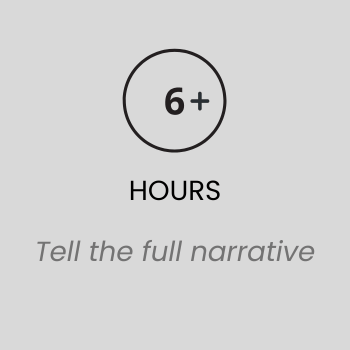
Two hours captures what happened. Four hours shows what it felt like. Six-plus hours lets you relive the entire arc, from setup and anticipation through to the emotional energy of a winding-down room full of loosened, happy people.
Why Every Hour Has It’s Own Value
Not all hours of an event are created equal and how I approach each window is deliberate. There's a structure to how I move through an event, and understanding it can help you decide where to invest your coverage.
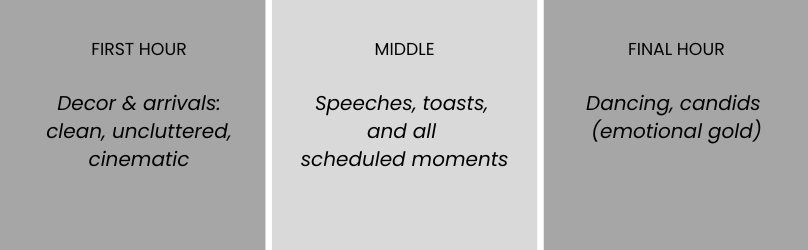
The first hour is often the most underestimated. Arriving before peak-event energy means I can capture decor shots with clean sightlines, genuine arrival expressions, and the atmosphere the venue was designed to create. The middle is where scheduled moments live (speeches, awards, toasts) and these are non-negotiable. But the last hour? That's where people let their guards down. That's where the best candid interactions happen. That's where you get the dancing, the lingering conversations, the energy of a celebration finding its natural end.
When You Need More Hours Than You Booked
It happens. An event runs long, a moment emerges that no one anticipated, or a client realizes mid-event they want more documentation. Whenever my schedule allows, I keep the day open around event bookings specifically to accommodate extension requests. It's not always possible, but it's something I plan for because I've seen enough events take unexpected, beautiful turns to know that rigidity doesn't serve anyone.
The Bottom Line
Photography hours (after the decision to hire a professional) are one of the important decisions in event planning, because they determine the depth of the story you'll have to look back on. My recommendation is always to be honest with yourself about what you want. If you're documenting a milestone, invest in the narrative. If budget is a hard constraint, be strategic about which moments matter most and communicate that clearly to your photographer.
After 17 years, I've never once had a client tell me they regretted booking too much coverage.